PhD Studentship - Every Body in 3D (CoSTAR)
About the Project
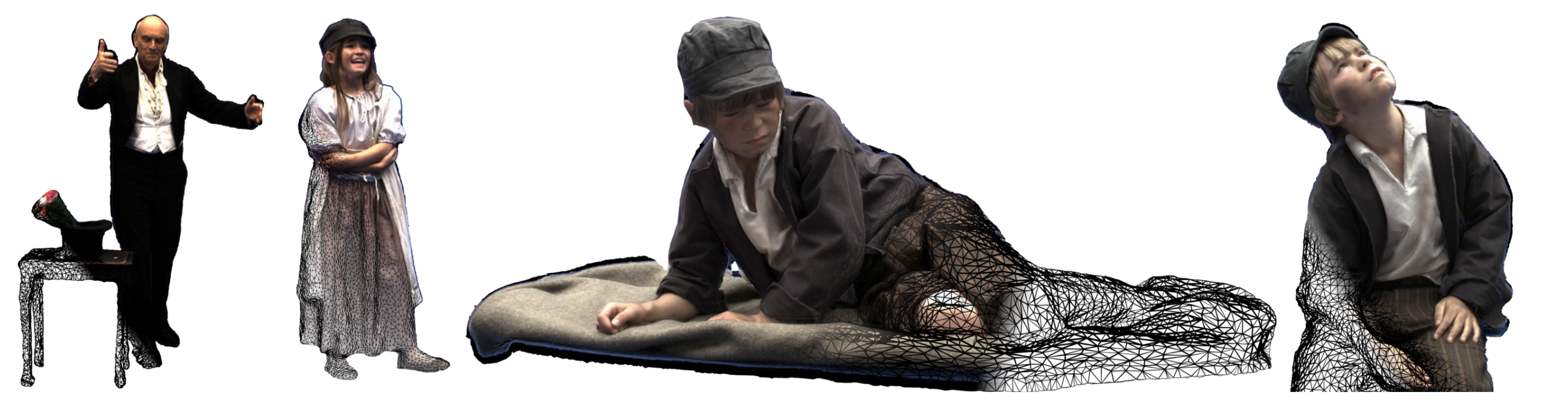
This project investigates inclusive single-view 3D human reconstruction, aiming to advance computer vision so it can accurately represent people with diverse body types, limb differences, and mobility aids. Existing reconstruction methods are typically trained on datasets built around “average” or able-bodied anatomies and often rely on strong priors of symmetry and canonical body structure. As a result, they frequently produce biased, incomplete, or anatomically incorrect digital models when applied to individuals whose bodies fall outside these narrow norms. This creates exclusion in applications such as virtual reality, avatar creation, and digital accessibility tools.
To overcome these limitations, the project will build a representative, high-resolution dataset using photogrammetry and motion capture. This dataset will be developed collaboratively with inclusivity specialists based at Royal Holloway, University of London (RHUL) to ensure ethical data collection, respectful representation, and fairness in design. Using this foundation, the research will develop new priors, learning strategies, and reconstruction approaches capable of handling non-standard anatomies, occlusions from assistive devices, and a broader spectrum of human shapes. Ultimately, the research aims to support accessible virtual environments and inclusive avatar generation, contributing to a future where 3D vision technologies can accurately and respectfully represent every possible body.
This research aligns with the CoSTAR programme’s focus on AI-assisted advances in production by developing data, models, and evaluation methods that support scalable and automated creation of high-quality 3D human assets from minimal input. By reducing reliance on restrictive assumptions such as symmetry and standardised anatomy, the project aims to improve robustness and generalisation in real-world production pipelines, working with CoSTAR creative industry partners and collaborators. The work has clear relevance to industry through CoSTAR, particularly in areas such as immersive media, games, XR, virtual production, and accessibility-focused digital tools, where inclusive and efficient digital human reconstruction is increasingly important. By addressing bias and representation at the level of data and model design, the project contributes to responsible AI technologies that can be adopted within creative and commercial production workflows.
Research environment and industry engagement
As a CoSTAR PhD student, you will work at the intersection of research, creativity, and industry, with access to the CoSTAR National Lab’s creative industries partners, including Pinewood Studios, BT, Disguise, and the National Film & Television School, alongside a wide range of additional collaborators. This offers a unique opportunity to develop research that is intellectually ambitious, creatively driven, and connected to real-world challenges in the creative industries.
We welcome students who are curious, motivated, and excited by research, including those who may not see themselves as a “typical” PhD candidate. You do not need to have a fully formed project at the outset — we value potential, ideas, and a willingness to learn and collaborate, particularly in relation to AI and the creative industries.
Supervision and support
Students will be supported by expert Lead and Co-supervisors at their host institution, alongside a wider network of academic and industry mentors across the CoSTAR partnership. This provides a collaborative, inclusive research culture with opportunities for skills development, interdisciplinary exchange, and professional growth.
Funding and financial support
All studentships are fully funded for three years in most cases and include:
UK tuition fees, paid directly to the host institution A tax-free maintenance stipend at the UKRI minimum rate UKRI fees and stipend rates for 2026/27 have not yet been confirmed. For reference, in 2025/26, UK tuition fees were £5,006 and the annual stipend was £20,780 (or £22,780 where London weighting applied).
Students will also have access to additional funding for research and training costs through their supervisors at their host CoSTAR institution.
How to Apply
Stage 1: Expression of Interest
Applicants should contact the Lead Supervisor for their chosen PhD opportunity by email or via the ‘Register Interest’ form below, and develop a 500-word Expression of Interest, outlining a proposed research project. This may include diagrams, timelines, and references if appropriate. Please submit this Expression of Interest along with a current CV and qualification transcripts by Friday 6 March 2026. Applications must be complete and submitted on time. Please label files clearly using your surname and the PhD reference ID or keyword (e.g. SURNAME_3D Every Body) and include this information in all correspondence.
Stage 2: Interviews of shortlisted candidates will be held before Friday 27 March 2026.
Stage 3: Offers will be made by Friday 24 April 2026.
Equality, diversity and inclusion
CoSTAR is committed to fostering an inclusive and welcoming research community. Equity, Diversity and Inclusion is a priority for CoSTAR. As such, we actively welcome applicants from all backgrounds and are especially keen to recruit people from groups currently under-represented in creative technology including women, non-binary and disabled people and ethnic minority/global majority candidates. We recognise that talent and potential take many forms, and we are committed to supporting all students to thrive.